

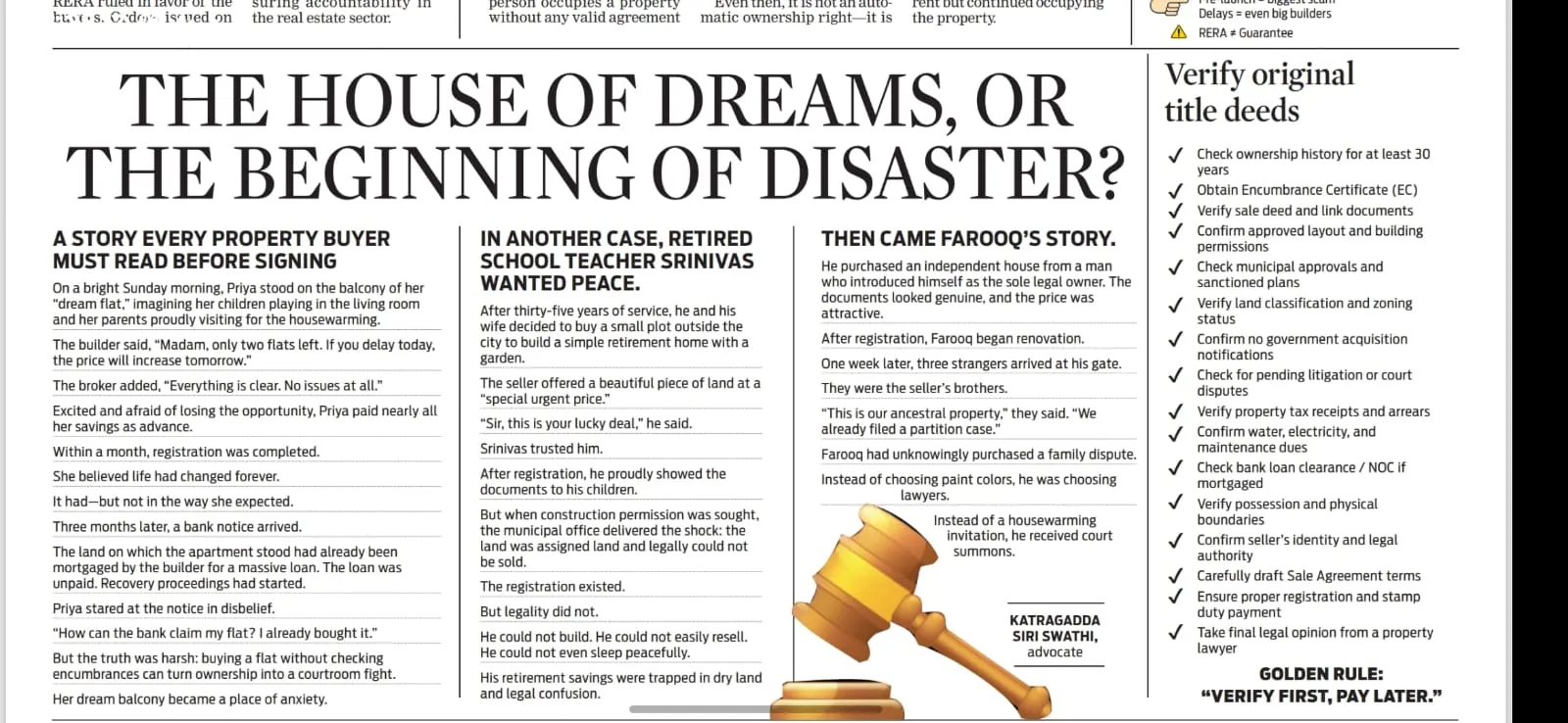
Buying a home often begins with an emotional decision: a place for family, security and the future. A considered legal review helps bring the practical questions into focus before you make a commitment.
The supplied awareness artwork, “The House of Dreams, or the Beginning of Disaster?”, encourages buyers to pause and verify. Its central message is a useful starting point for your conversation with a property advocate.
Begin with the documents
Ask what records are available and whether they relate to the exact property being offered. Keep copies of the proposed agreement, title documents supplied by the seller, property particulars and any written representations made to you.
An advocate can explain which further records need to be examined for your transaction. The relevant documents and checks depend on the property’s location, type and history.
Questions worth taking to your advocate
- What do the available records show about ownership and the seller’s authority?
- Are there mortgages, disputes or other interests that need closer examination?
- Do the property description, extent and boundaries match across the records?
- Which permissions and approvals need to be checked for the intended use?
- What obligations, payment stages and conditions appear in the proposed agreement?
- What further verification should happen before a commitment is made?
Give the review time
Pressure to pay quickly can make it difficult to ask questions. Discuss your transaction timetable early and allow time to obtain documents and resolve inconsistencies. A review is most useful while you still have an opportunity to consider its findings.
A property decision should be supported by records, clear questions and advice specific to the transaction.
Keep a clear record
Keep written communications, payment records and copies of the versions of documents you receive. Bring these to your consultation so the discussion can focus on the actual transaction rather than assumptions.
This introduction draws on the supplied property-awareness artwork. It is not a title opinion, an exhaustive due-diligence checklist or advice that a particular property is safe to buy.